A new social me
How the Fediverse has influenced the way I live my (online) social life now.


When thinking about social media, I can barely remember a time over the last couple of years when I wasn't tired of using it. When I didn't feel posting fatigue on Instagram and other big social media platforms.
Why? Because I felt like I was tilting at windmills.
My reach dropped to the bottom due to ever-changing algorithms, Instagram's policy to limit reach when you don't pay for ads or their blue tick, and their full switch to video content to first beat Snapchat and then become TikTok 2.0. Forced recommendations, ads, and hype-bubble AI made using Instagram a hellscape - even before their embrace of fascism. Posting on Instagram was no fun anymore.
Even worse, whenever I was posting on Instagram, I had the feeling that I was putting something that I love in a bad place.
Being a photographer in an industry that preaches Instagram as its only imaginable network drains my energy and makes me question whether I'm in the right industry. Things got so bad that you now have to share an Instagram story of a major conference sponsor to get on the list for their evening event - an event that previously required a simple web form to register. Not to mention seeing my wedding photographer friends start doing cringe videos just to stay on top of the algorithm, always hoping to go viral someday to... to what, actually? A short dopamine hit with no long-lasting benefits.
The last Days of Social Media
Social media on big tech platforms isn't about sharing what we love and connecting with others anymore. It has become an ad platform on which everybody seems to have to build a "personal brand" - and with that, professionalise and monetise what you once just did for fun and relaxation. Platforms that are optimised to sell your life to ad companies have grown users who are more than willing to sell their lives to feel seen. Gain attention, force engagement, be relevant.
But no matter how hard you try, there is still somebody who takes better photos, has a more adventurous life, a more attractive and supportive partner, more and better clients, and definitely more money than you.
Stepping out of this as a small business owner felt hard for a long time. It still does, and I haven't cut all business ties with Instagram yet. But like Joan Westenberg said, in the end it comes down to two things: keep optimizing for reach, or start optimizing for resonance.
I didn’t leave the attention economy because I hated it. I left because I understood it, because once you see the system for what it is - a parasitic loop that rewards noise over nuance, metrics over meaning, reaction over reflection - you have two choices. Keep optimizing for reach, or start optimizing for resonance.
 JA Westenberg
Joan just moved their blog so the link might be broken at the moment
As someone who loves elopements and smaller weddings for the close connection I can have with my clients, I go with resonance.
It's no secret: I really don't feel well with what social media has become - and I'm not alone. The connection and reach that Instagram made possible decades ago have basically vanished, and the direction big tech social media took - and is speeding toward - is reflected in the global numbers of user activities. James O'Sullivan recently wrote in his article The last Days of Social Media:
While content proliferates, engagement is evaporating. Average interaction rates across major platforms are declining fast: Facebook and X posts now scrape an average 0.15% engagement, while Instagram has dropped 24% year-on-year. Even TikTok has begun to plateau. People aren’t connecting or conversing on social media like they used to; they’re just wading through slop, that is, low-effort, low-quality content produced at scale, often with AI, for engagement.
Systems designed to surface peer-to-peer engagement are now systematically filtering out such activity, because what counts as engagement has changed. Engagement is now about raw user attention – time spent, impressions, scroll velocity – and the net effect is an online world in which you are constantly being addressed but never truly spoken to.
 James O’Sullivan
Social media, as we know it, seems to be reaching its end (thank God). An end that comes long after big tech social media took the route of what Cory Doctorow calls enshittification: unpleasant to use and far from its original promise, optimised for squeezing out money until everyone is sick of this shit and it finally collapses.
It describes how digital services often evolve from user-friendly beginnings into exploitative systems that are difficult to leave due to high switching costs and network effects.
This deterioration affects both consumers and businesses relying on these platforms, resulting in what is also called "platform decay".
Check out his book: Enshittification
A new social me
Things changed for me over the last 3-4 years when I gradually stepped away from big tech social media. The term big tech here is important. I didn't abandon social media as a whole (which I honestly think is still a good thing to do), but focused more and more on another version of it: the so-called new social web - the Fediverse.
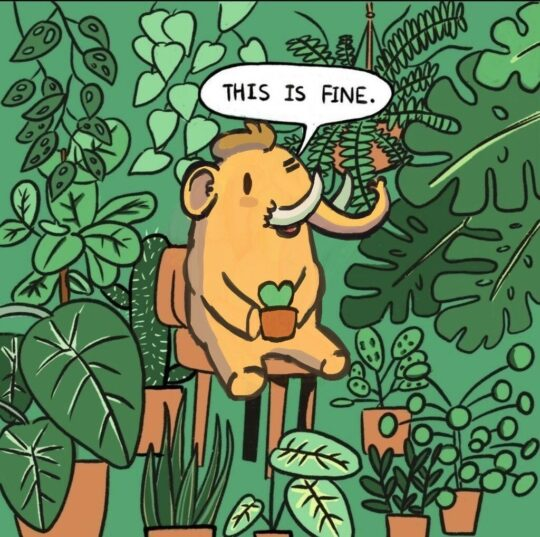
The Fediverse has been my go-to social web for around three years now, and I’ve noticed that it has changed my online life for the better. Why is that, and what do I mean?
No Pressure
For the first time in years, I don't feel oddly pressured to post on social media. With Instagram I always had this feeling: pressure to obey the algorithm.
Post more often! Post more regularly! Do videos!
Post more often! Post more regularly! Post during the time your followers are online! Post something that fits the colour palette of your current grid! Write a good caption! Write an engaging caption! End your caption with an engaging question! Write an unpopular opinion! Write for your future clients! Post a wide, then a middle, then a close shot! Don’t post only portraits! Post detail shots in between! Interact with your followers within the first 30 minutes after you post for more reach! Post carousels for more interaction! Encourage your followers to save your posts as well! Split your photo over three images for an outstanding grid view! Use frames around your images to make them look timeless! Follow all the industry vendors and participate in their challenges to be seen! Use hashtags! Don’t use hashtags!
When I started posting my images, e.g., on Pixelfed (an Instagram alternative in the Fediverse), I quickly noticed how "trained" I was by social media. Should I post them now or when people get back from work? I've already posted today; should I wait until tomorrow to be more consistent? Is there a common theme in this series of images and does it fit my target group?
On the Fediverse, none of these things matter, and I quickly went back to my early non-professional days on Flickr: I post because I like what I did. When? Whenever I feel like it. Why? Because of the absence of a purely commercial purpose for the network (and an algorithm feeding it), I can just be myself and post the things I like to share. Still aligned with my aesthetic, but without the perfectionism I felt forced to provide with every image and every text I posted online on Instagram. Because my audience is not an algorithm, but regular, normal people like me. Without fighting an ever-changing algorithm for more reach, the pressure quickly vanished.
And even more important: I don't feel that I need to change myself to stay (or become) relevant in the network. No cringe videos of myself or "stories" about my (perfectly directed) everyday life. No attention-seeking. No engagement farming. What a relief!
Normal People enjoying normal Things
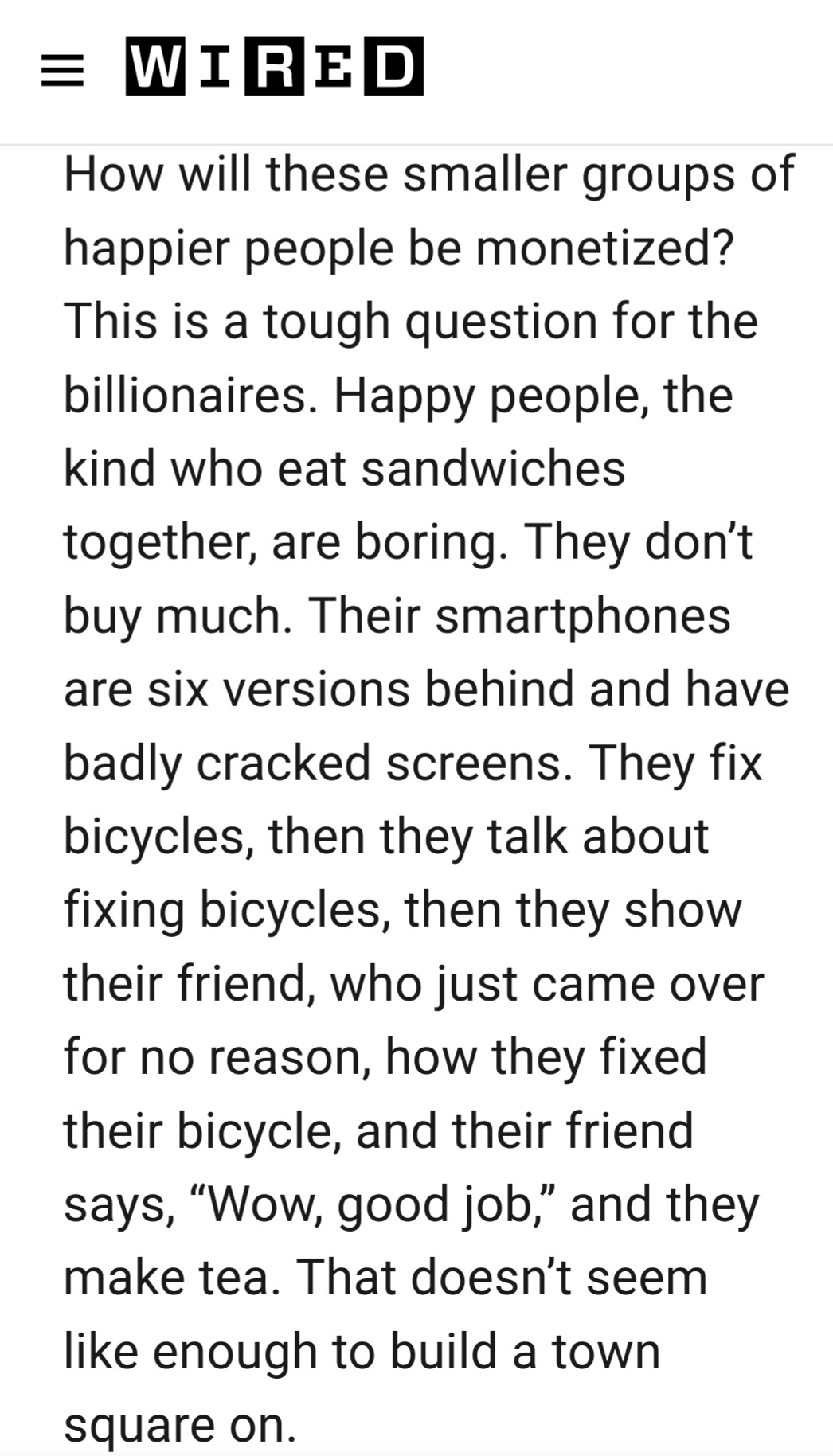
Regular, normal people are what made social media actually social. Being on the Fediverse brought back those good old days of the internet for me. Here, I can have direct, one-on-one connections with normal people around the world who share their hobbies, passions, and views in a non-disruptive way. No ads, no AI, no forced recommendations. Just crafting, painting, coding, writing, pottering. No influencers in the much-hated way, but a lot of lovely weirdos who are experts in their niche or just live their lives. Here, people follow and comment on each other with respect because they like what you do, and they are eager to help each other out.
People are sharing what they enjoy, and thanks to the absence of an algorithm, a smartphone snapshot of a bird in a garden gets the same attention as a polished, high-professional wildlife shot. This is refreshingly grounding.
I think Wired described the people of the Fediverse very well in God Did the World a Favour by Destroying Twitter (archive link here) back in 2023:
The Relieving Joy of Boredom
Being on a network that doesn’t aim to trap you with psychological dopamine tricks, algorithmic screening of your online behaviour to serve you something appealing, or walled-garden apps that make it hard to leave brings something interesting with it: boredom.
When I first started with the Fediverse, my timeline was a white plate. There were no starter packs (recommended accounts to follow by topic) yet. So I checked the accounts known to me, followed hashtags, and crawled starter lists of Fedi accounts dedicated to helping newbies. With time, I found my folks, made new connections and new friends. I shared my passion, gained followers with my art or texts, and now have a lovely group of people I check out on a daily basis. It's the good old human interconnection groundwork.
For a VC-funded platform, boredom is the death of the project. As a user in 2026, I have to say I highly embrace it. Why? Because it naturally reduces my already way-over-the-limit screen time. And, as an artist, boredom does good things for my creativity. It makes me rethink different aspects of my work and encourages me to experiment. And that’s what art is about, right?
Something we often forget: doomscrolling is not inherent to social media. It's a psychological trick to keep you in an app. On the Fediverse, you just have a chronological, ad-, algorithm-, and recommendation-free timeline. Even if you have your crowd to follow, these people have jobs and families, and they tend to sleep a couple of hours a day. At some point, you have read everything they've posted during the day. And since there is just you and your chronological timeline, you might put your phone down and do something in the real world.
The Culture of Care
Being part of a network that is interested in supporting each other also taught me to use social media in a different way.
The tone and interactions with each other in general are softer and more supportive. People don't tend to watch for troll bait to post some shit comments on others. Instead, if someone asks simple questions, they often get helpful answers without being judged.
The outcome is that you can have great discussions with others on various topics. Discussions that actually lead to people changing their previous opinions, because they don’t tend to post just to make a statement but to seek clarity.
Don't get me wrong, the Fediverse also has its assholes. But since no VC-backed company is involved that uses anger and hate as fuel to make a profit, it's the humans of the Fediverse who want to see this network thrive.
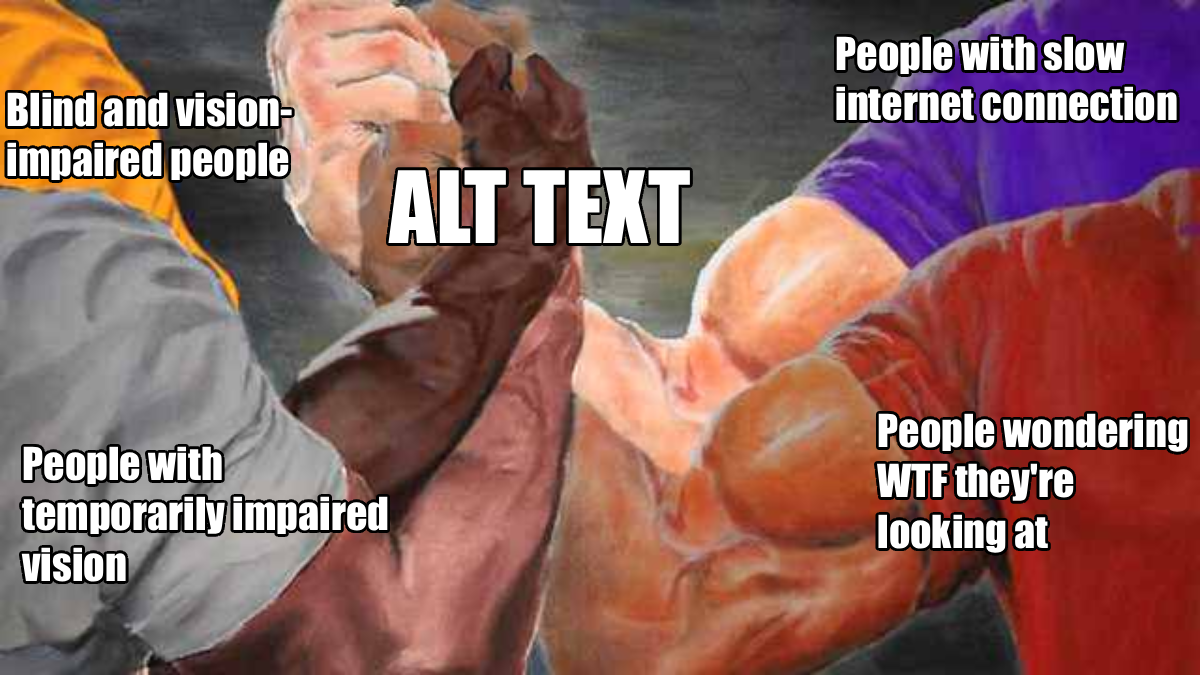
Taking care of each other can also be seen in how alt text (the description of images for people with visual impairments) is handled. It’s common sense in the Fediverse that you add alt text to your images so that, e.g., blind people are able to participate in your hilarious meme post.
It also comes with other benefits. Alt-text can be easily indexed by a search engine, which makes visibility for your work even better-something every self-employed photographer wants. And it helps a lot with, e.g., images containing text in a foreign language or an otherwise unknown context to me, because they describe what is going on and can be easily translated, even by screen readers.
Inclusion benefits everyone.
Staying Sane in Troubling Times
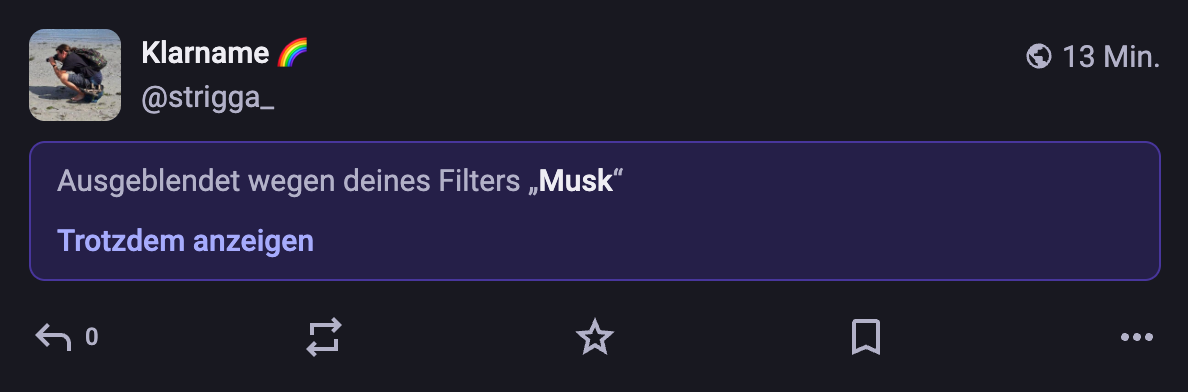
The world is dominated by old white men with fragile egos and unlimited wealth, and they are gambling with all our futures. The news these days is so insane that it's hard to avoid, even in the Fediverse. But here you are provided with a good toolset to manoeuvre around topics you don't currently feel you can handle. Mastodon's filter settings, for example, let you add content warnings to specific self-chosen texts or hashtags, or even allow you to hide matching posts altogether. You can also set these options temporarily to free your feed from specific events you don't want to follow, like a World Cup.
Not just Social Media, but also everything else
But it's not just the functional side that makes this network unbelievably joyful and relaxing for me. It's also what comes with it: the people.
People in the Fediverse are actively bringing back the joys of the old web. They set up personal websites - like we used to do in the early 2000s-and start blogging again to write about their passion projects. They distribute their articles, drawings, photos, and podcasts over RSS so that they are free for everyone to see and read - without the need for an account or even a subscription. If you are closer to your 20s than your 40s, this might be new to you, but the internet was intended to be accessible and open.
They also start owning again what is theirs. Not just in terms of privacy, like their personal data, but literally music, videos, and services they like. They collect CDs, DVDs, and Blu-rays again and digitise them to operate their own private Spotify or Netflix. And I can tell you from personal experience: it's a hell of a lot of fun, and flea markets are my new second home.
They fix broken things and help others do so as well. They do community work to provide support and share knowledge with others. And that sparks hope in times when the world is full of egos and hate.
Personal Summary
After years of internal struggles with big tech social media, I've found my new place with the Fediverse. A place that has honestly changed me. Or better: a place that truly aligns with my core beliefs, which I've suppressed for the last couple of years to be seen on Instagram.
Today I'm fully back to what is dear to me: privacy, digital sovereignty, DIY, creativity, community. Today I self-host my own Netflix and help others do this as well. I write this blog. I moved all my data out of common clouds to truly own it again. I started gardening. I volunteer to help people with computer problems in our local community centre. I give practical workshops on digital independence. I can be myself again.
And the Fediverse helped me with that. Even if it had only shown me: you are not alone. I find joy in social media again, and I've made friends along the journey.
Even better: I stopped caring about Instagram. Big tech doesn't matter to me anymore, and it is sooooooo refreshingly relieving. I don't feel the pressure to stage myself anymore. Likes are not important, reach is not important (and a myth), followers are not important. When I lose followers on IG (and that happens every week), I simply don't mind. Farewell, bots, algorithms, ads, recommendations, AI, influencers and trackers! Farewell to the person who might also have just deleted their account because they couldn't stand it anymore (I’m rooting for you!).
Have you felt the same fatigue? Are you still on Instagram because you feel you have to be? I'd love to hear your thoughts - here, via email, or on the Fediverse.